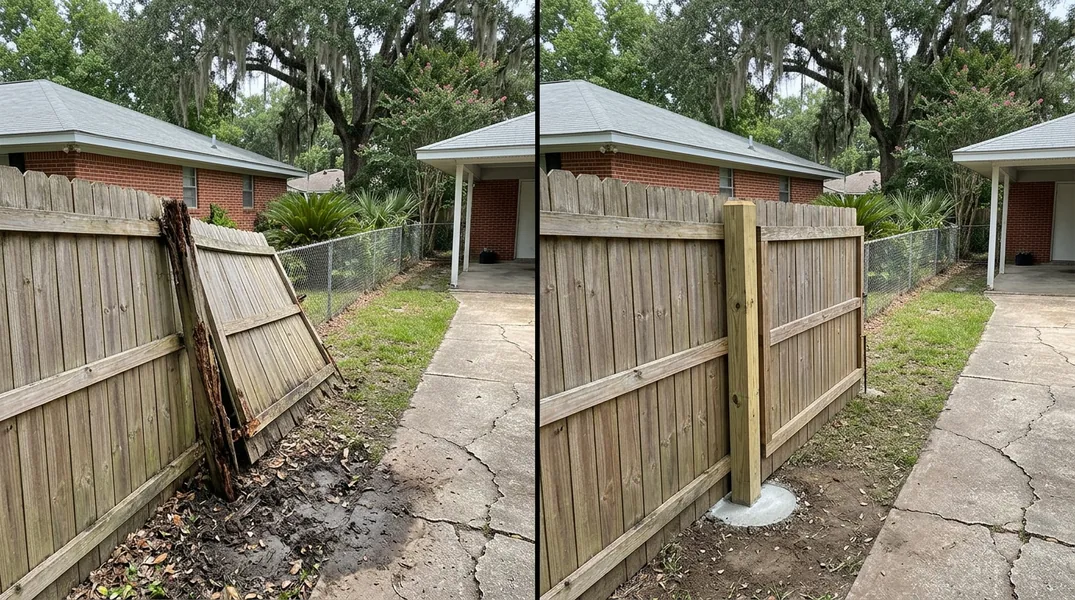
Understanding Fence Post Lean in Baton Rouge's Unique Soil Conditions
If you've driven through Baton Rouge and noticed fences that appear to tilt or lean over time, you're witnessing a common phenomenon tied directly to our region's geological makeup. Unlike areas with dense clay or rocky soil, Baton Rouge sits on soft, compressible soil that behaves very differently when subjected to the weight of a fence structure. This isn't a sign of poor installation, but rather a natural response to environmental conditions that every homeowner in our area should understand.
The distinction between fence post lean and heave is critical. Heaving occurs when soil expands upward, typically from frost cycles pushing the post up. Leaning, by contrast, happens when the soil gradually compresses and shifts laterally under the weight of the fence, causing the post to tilt. In Baton Rouge, we experience minimal frost heave due to our mild winters, but we do deal with significant soil settlement and lateral movement. Understanding this difference helps you recognize what's normal wear versus what requires professional intervention.
Why Soft Soil Causes Posts to Lean Rather Than Heave
The soil composition beneath Baton Rouge is predominantly silt and clay with high water content. This type of soil is relatively unstable compared to the compacted clay or granite-based soils found in other regions. When a fence post is installed, it displaces this soft soil. Over time, particularly during heavy rains or seasonal water table fluctuations, the surrounding soil settles and compacts. This compression doesn't happen uniformly, which is why posts lean rather than simply sink straight down.
The physics is straightforward: as the soil on one side of the post compresses more than the other side, the post naturally tilts toward the area of greatest settlement. Our region's high water table and frequent rainfall exacerbate this issue. During wet seasons, the soil becomes even softer and more prone to lateral shifting. During dry periods, it shrinks and creates voids. This cycle of expansion and contraction gradually encourages post movement. Professional Wood & Privacy Fence Installation contractors in the area account for this by using deeper post holes, concrete footings, and strategic drainage solutions to minimize settlement.
Do I Need a Permit for a Fence in Baton Rouge?
Yes, you do need a permit for a fence in Baton Rouge. This is one of the most common questions homeowners ask, and understanding the permit requirement upfront saves time and potential fines. The Baton Rouge building department requires a fence permit for most residential installations. The permit process ensures your fence meets local building codes, complies with setback requirements, and doesn't violate utility easements or HOA restrictions.
Skipping the permit process might seem like a shortcut, but it can create serious problems down the line. If you sell your home, the buyer's inspector or lender may flag an unpermitted fence. You could be required to remove it or obtain a retroactive permit. Additionally, if your fence damages a neighbor's property or causes an injury, liability issues become complicated without proper permits. When you contact Baton Rouge Fence Installers for your Wood & Privacy Fence Installation, we handle the permit process for you, ensuring everything is filed correctly and inspected properly.
Fence Height Regulations and HOA Approved Fence Standards in Baton Rouge
Baton Rouge has specific fence height regulations that vary depending on the type of fence and where it's located on your property. Generally, front-yard fences are limited to 4 feet in height, while backyard fences can reach 6 feet. However, these regulations can vary by neighborhood and zoning district. If your property is in a historic district or has special overlay zoning, additional restrictions may apply. It's essential to verify the exact height regulations for your specific address before you begin planning your fence project.
If you live in an HOA-governed community, an HOA approved fence adds another layer of requirements. Many HOA communities have design guidelines that specify acceptable materials, colors, styles, and heights. Some HOAs require pre-approval before you install any fence. Violating HOA fence restrictions can result in fines or mandatory removal of the fence. Before you invest in your fence, obtain a copy of your HOA's architectural guidelines and submit your plans for approval. Baton Rouge Fence Installers can guide you through this process and help you select designs that meet both municipal code and HOA requirements, ensuring your investment is protected.
Fence Permit Cost and Budget Considerations for Baton Rouge Homeowners
The fence permit cost in Baton Rouge is typically modest, usually ranging from $50 to $150 depending on the scope of your project. This is a small investment compared to the cost of your entire fence installation and the protection it provides. The permit fee covers the cost of the building department's review and inspection process. Some jurisdictions may charge based on the linear footage of fence being installed, so a longer fence may cost slightly more to permit than a shorter one.
When budgeting for your fence project, factor in the permit cost along with materials, labor, and any site preparation work. Our pricing page provides general guidance, but the total investment depends on your specific needs, soil conditions, and design choices. The soft soil conditions in Baton Rouge may require deeper footings or additional concrete reinforcement, which can affect overall costs. We recommend requesting a free estimate from Baton Rouge Fence Installers so you can see a detailed breakdown of all costs, including permits, materials, labor, and any soil-related adjustments specific to your property.
Professional Solutions to Prevent Post Lean in Baton Rouge Soil
The best way to prevent fence post lean in our soft soil is to work with experienced professionals who understand local soil conditions. Proper installation begins with digging post holes deep enough to reach more stable soil layers. In Baton Rouge, this typically means going at least 3 to 4 feet deep, sometimes deeper for taller fences. The posts should then be set in concrete, which provides a stable base and resists lateral movement better than soil alone. Quality concrete footings are essential for long-term fence stability in our region.
Drainage is another critical factor. Posts installed in areas where water pools or where the water table remains high are more prone to lean. Professional installers incorporate drainage solutions, such as gravel-filled post holes or perforated drain pipes, to direct water away from the post base. Additionally, selecting the right fence material matters. Vinyl & PVC Fence Installation and Aluminum & Ornamental Iron Fencing options may be lighter and place less stress on soft soil than heavier wood alternatives in certain applications. When you work with Baton Rouge Fence Installers, we assess your specific soil conditions and recommend the best installation techniques and materials for your property to ensure your fence remains straight and stable for years to come.
Looking for a professional tree service in Baton Rouge? Baton Rouge Fence Installers responds fast for all your fence needs.
Get a Free Quote