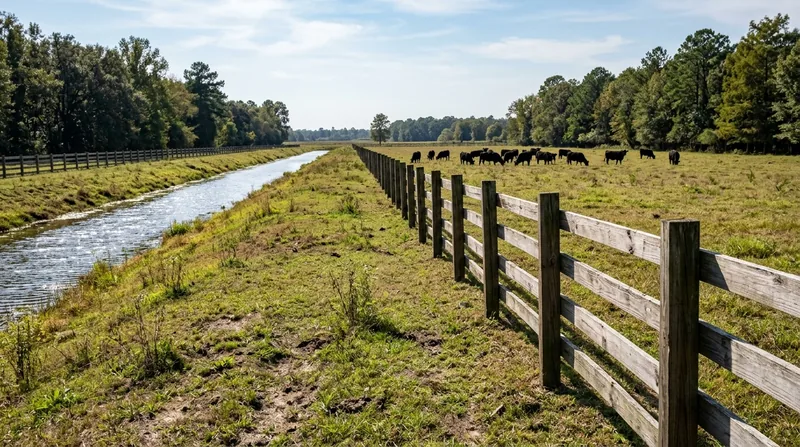




Farm fence installation in Baton Rouge crosses terrain that demands understanding local drainage patterns, property lines that run through pasture and woodlot, and the difference between a quick fix and a fence that holds cattle and horses for a decade. Whether you own acreage in Livingston, Ascension Parish, or the ridge country around Denham Springs and Walker, a well-built ranch fence starts with solid posts set in concrete, proper spacing, and materials chosen for the job. We install wood rail, wire, and vinyl rail fencing on working farms and horse properties across Greater Baton Rouge, and we work from your existing survey to put the fence exactly where it belongs.
Why Farm and Ranch Fencing Matters in Baton Rouge
Pasture fencing on acreage outside Baton Rouge has to contend with wet ground, drainage canals, and property lines that may cross ridges or low spots. A fence that fails in year three costs twice as much to replace as one built right the first time. The difference is usually in the post setting, the rail spacing, and whether the materials suit the exposure at ground line. We size posts for the span, set them deep in concrete to handle frost and wet soil, and choose materials that hold up to moisture and use.
- We set posts in concrete to prevent settling and tilting over time.
- We space rails to match the animal and the job, whether it is pasture containment or no-climb security.
- We select wood species, vinyl, or wire based on your budget and how long you want the fence to last.
- We install on the property line you identify from your survey, with utility locates completed before we dig.
A fence that holds for ten years is cheaper per year than one that needs repair or replacement in five.
Key info: Louisiana law requires a Louisiana 811 utility locate before any digging. We call for the locate and wait for the clear before we set a single post. This protects underground lines and your liability. See Louisiana 811 for details on what gets marked.
How We Build Farm and Ranch Fencing Near Baton Rouge
A ranch fence installation starts with a walk of the property, a check of your survey, and a clear understanding of what the fence needs to do. We measure, locate utilities, and plan for drainage, rock, or obstacles before we order materials. The job itself follows a sequence that ensures the fence sits level, the posts are solid, and the rails or wire are tight.
- We call for a Louisiana 811 utility locate and wait for clearance before digging any post holes.
- We measure the fence line and mark post locations to match the span and the material.
- We dig post holes to depth and set posts in concrete, ensuring they are plumb and stable.
- We install rails, wire, or vinyl panels, keeping them level and tight to prevent sagging.
- We add anti-sag bracing or tension bands where needed for long spans or wire fencing.
- We trim and finish the fence, leaving a clean, professional appearance and a property line you can trust.
The entire process respects your property, your time, and the local rules that govern fencing in your county or municipality.
Example: A five-acre property in Livingston with a 400-foot fence line and soft ground takes about three to four days. Posts are set 8 feet apart in concrete, rails are installed and braced, and the fence is ready for cattle or horses. If the terrain includes a drainage canal or a ridge, we step or rack the fence to follow the ground and maintain proper height and clearance.
Farm and Ranch Fencing Methods and Materials
| Approach | Description | Best for |
|---|---|---|
| Wood Rail Fencing | Pressure-treated pine or cedar rails set on concrete posts, typically 2 to 4 rails high depending on the animal and the look you want. | Horse pastures, cattle containment, and properties where a traditional ranch appearance is the goal. |
| No-Climb Horse Fence | Vinyl or wire mesh panels installed on wooden or metal posts, designed to prevent injury and escape from horses or young animals. | Equestrian properties and farms where animal safety and durability are the priority. |
| Pipe Fence Installation | Galvanized or powder-coated steel pipe set in concrete footings, offering strength and a clean, modern look for high-value properties. | Upscale ranch properties, show grounds, and areas where longevity and low maintenance are essential. |
| Barbed Wire or Woven Wire | Wire stretched tight on wooden posts with tension bands and stretcher bars, suitable for cattle and large pastures on a budget. | Large acreage, cattle operations, and properties where the fence is purely functional and cost-sensitive. |
| Split Rail Fence Installation | Hand-split or milled rails set on posts, offering a rustic, natural appearance with moderate durability and maintenance. | Residential acreage, hobby farms, and properties where aesthetic appeal and tradition matter as much as function. |
Each method has a cost, a lifespan, and a maintenance profile. We help you choose based on your animals, your budget, and how long you plan to own the property. Visit our pricing page for specific costs on each approach.
Farm and Ranch Fencing Cost in Baton Rouge: What to Expect
Farm fence installation costs in the Baton Rouge area start at around $13 per linear foot for basic wire or split rail on pasture ground. A typical 400-foot property line with wood rail fencing runs $5,200 to $6,400 depending on the number of rails, the post spacing, and whether the ground is level or requires stepping. Pipe fencing and no-climb horse fence cost more because the materials are stronger and the labor to set them properly is higher. A property with drainage challenges, rock, or obstacles that slow digging will see costs move upward.
The factors that move the price are straightforward: the length of the fence, the material you choose, whether the ground is level or sloped, and whether you need anti-sag bracing or tension systems for long spans. A free estimate from us includes a walk of the property, a measurement of the fence line, and a clear breakdown of cost by material and labor. We get 2 to 3 estimates so you can compare apples to apples, and we never surprise you with add-ons when the bill comes due.
For a detailed look at pricing by service and material, see our full pricing guide. Call us at (225) 267-8062 for a free estimate on your property.
What to Look for When Hiring a Farm and Ranch Fencing Contractor Near Baton Rouge
A good fence contractor on acreage in Baton Rouge or Livingston is fully insured, understands local utility rules and permit requirements, and can explain why they are choosing the materials and the method they propose. We are an AFA Member Installer (American Fence Association) and have been in business since 2016. We work from your existing survey, we call for utility locates before we dig, and we stand behind our work with straightforward pricing and no surprises.
- Ask whether the contractor is fully insured and can provide a certificate of insurance for your records.
- Request references from recent farm or ranch jobs, and call them to ask about the fence and how it has held up.
- Confirm that the contractor calls for a Louisiana 811 utility locate before any digging begins.
- Check whether local setback or height rules apply to your property, and ask the contractor to clarify them before the job starts.
- Get a written estimate that breaks down material, labor, and any travel or site prep costs so there are no surprises at the end.
A contractor who takes time to understand your property, your animals, and your long-term plans will build a fence that lasts. Contact us at baton-rouge-fence-installers.com/contact/ or call (225) 267-8062 for a free, no-obligation estimate on your farm or ranch fencing project.
Farm & Ranch Fencing in Baton Rouge: Pricing Guide
| Service | Price | Details |
|---|---|---|
| Wood Rail Fencing | Starting at $13/ft | Pressure-treated pine or cedar rails on concrete posts, cost increases with number of rails and post spacing |
| No-Climb Horse Fence | Starting at $18/ft | Vinyl or wire mesh panels on posts, higher cost reflects material durability and safety features for equestrian use |
| Pipe Fence Installation | Starting at $22/ft | Galvanized or powder-coated steel, premium material and labor for strength and low-maintenance appearance |
| Barbed Wire or Woven Wire | Starting at $8/ft | Wire stretched on wooden posts with tension bands, most economical option for large acreage and cattle operations |
| Site Challenges or Custom Work | On estimate | Drainage canals, rock, slopes, or unusual terrain require on-site assessment before pricing |
| Free Estimate | No charge | Response within 24 hours at (225) 267-8062, includes property walk and written breakdown by material and labor |
Indicative pricing, the exact cost depends on square footage, finish, and site access. Free personalized estimate within 24h at (225) 267-8062.


