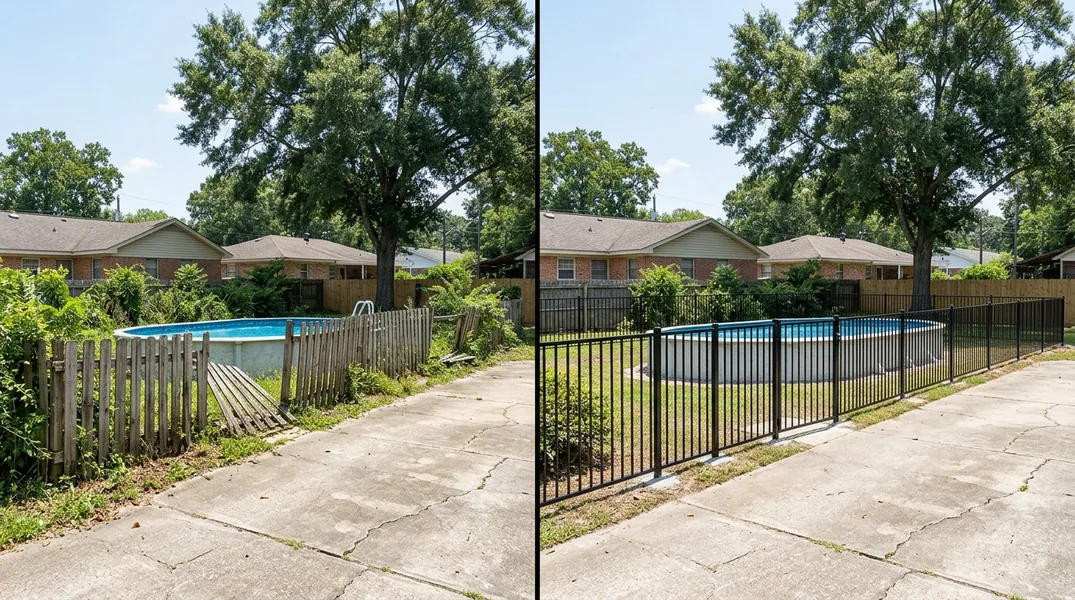
The Challenge of Fencing in Old Goodwood and Southdowns
Homeowners in Baton Rouge's established neighborhoods like Old Goodwood and Southdowns face unique fencing challenges that newer subdivisions simply don't encounter. These mature, tree-lined communities are beautiful, but their natural features create real obstacles when planning Wood & Privacy Fence Installation. The sprawling live oak trees that give these neighborhoods their character cast deep shade, create surface root systems, and drop heavy branches that can damage fence structures over time.
Beyond the trees, the soil composition in these older areas presents another significant hurdle. The soft, sometimes waterlogged ground typical of South Louisiana requires special attention during installation. Posts set in unstable soil can shift, settle unevenly, or lean within just a few seasons. Understanding these environmental factors before you build is essential to ensuring your fence investment lasts for decades rather than years.
Working Around Live Oak Root Systems and Branches
Live oaks are iconic to Baton Rouge neighborhoods, but their shallow, spreading root systems can make fence installation tricky. When a fence line runs near or under a mature live oak, installers must carefully locate roots before digging post holes. Damaging a tree's root system can weaken the tree, invite disease, and create legal liability. Professional fence installers in these neighborhoods know how to map out root locations and adjust post placement to avoid causing harm.
The heavy branches of live oaks also pose long-term maintenance concerns. A well-positioned fence should account for branch hang and potential storm damage. Posts should be sturdy enough to withstand a falling limb, and the fence line should ideally be set far enough back to prevent branches from resting directly on the fence structure. Additionally, the dense shade cast by these trees means your fence may take longer to dry after rain, increasing the importance of proper Wood & Privacy Fence Installation with quality materials that resist moisture and rot.
Managing Soft Ground and Drainage Issues
South Louisiana's high water table and clay-heavy soil create drainage challenges that affect fence longevity. In neighborhoods like Old Goodwood and Southdowns, standing water around fence posts is common, especially during heavy rains. This persistent moisture accelerates wood rot, promotes fungal growth, and destabilizes post footings. Professional installers address this by setting posts deeper than standard recommendations, using concrete footings that extend below the water table, and sometimes incorporating gravel or drainage layers around post bases.
The soft ground itself requires a different approach than firmer soils found in drier regions. Posts cannot simply be driven into the earth; they must be carefully set in concrete with proper depth and bracing. Some areas may require helical anchors or adjustable post bases that allow for settling without compromising fence integrity. Choosing an installer familiar with Baton Rouge's specific soil conditions ensures your fence won't shift or lean as the ground settles over time.
Fence Staining and Sealing: Protecting Your Investment
Once your wood fence is installed, the real work of protection begins. The humid subtropical climate of South Louisiana is tough on exposed wood. Moisture, UV rays, mold, and mildew can quickly degrade an unprotected fence. This is where fence staining becomes essential. A quality stain penetrates the wood, enhances its natural appearance, and provides a protective barrier against the elements. Unlike paint, which sits on the surface and can peel, stain works with the wood's natural grain and movement, making it ideal for the climate here.
Fence sealing is equally important and often works alongside staining. A good sealer creates a water-resistant layer that prevents moisture from penetrating the wood fibers. In Baton Rouge's climate, where humidity levels are consistently high and rain is frequent, sealing your fence every two to three years can extend its lifespan by years or even decades. The combination of staining for aesthetics and sealing for protection gives you the best defense against rot, discoloration, and structural damage.
Fence Staining Cost in Baton Rouge: What to Budget
Understanding fence staining cost helps homeowners plan their maintenance budget effectively. The pricing for fence staining depends on several factors: the linear footage of your fence, the condition of the wood, whether the fence needs cleaning or repairs before staining, and the quality of the stain product you choose. A basic stain application for a 100-foot fence might range from $300 to $600, while a premium stain with enhanced durability could cost $600 to $1,200 or more. Sealing services are often priced separately or bundled with staining for a modest additional fee.
When comparing quotes for fence staining near me services in Baton Rouge, remember that the cheapest option isn't always the best value. Professional-grade stains and sealers, applied by experienced technicians, last longer and provide better protection than budget alternatives. Many homeowners find that investing in quality staining and sealing every few years actually saves money by preventing costly repairs or premature fence replacement. For a detailed estimate tailored to your specific fence and property, contact Baton Rouge Fence Installers at (225) 267-8062 or request a free estimate online.
Maintenance Tips for Long-Lasting Fences in Challenging Terrain
Beyond initial staining and sealing, regular maintenance keeps your fence healthy in Baton Rouge's demanding climate. Inspect your fence twice a year, particularly after heavy storms, for signs of damage, rot, or pest activity. Clear debris and fallen branches away from the fence base to prevent moisture accumulation. If you notice soft spots in the wood, discoloration, or areas where stain is peeling, address them promptly before damage spreads. Trim back vegetation that touches the fence to improve air circulation and reduce fungal growth.
Plan for periodic resealing based on your climate exposure. Fences in full sun may need resealing every two to three years, while shaded areas like those under live oaks may require attention more frequently due to moisture retention. Keep gutters and downspouts directed away from fence lines to minimize water pooling. If your fence begins to lean or shows signs of post failure, contact a professional immediately. Early intervention can save the fence; waiting often results in complete replacement. For expert advice on maintaining your specific fence or to schedule professional staining and sealing, reach out to Baton Rouge Fence Installers at (225) 267-8062 today.
Looking for a professional tree service in Baton Rouge? Baton Rouge Fence Installers responds fast for all your fence needs.
Get a Free Quote