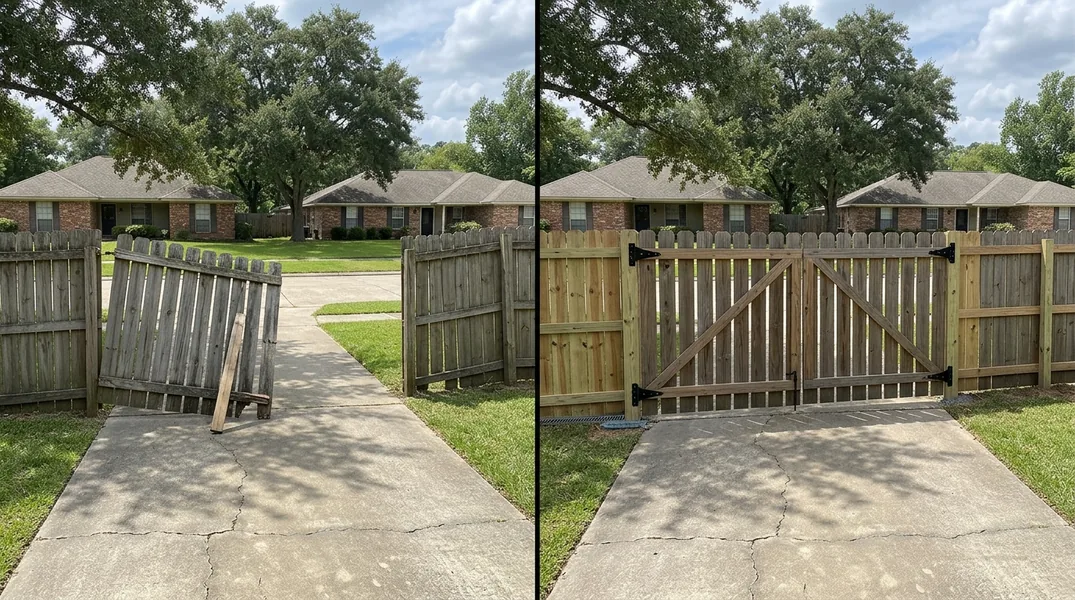
Understanding Wood Fence Lifespan in Baton Rouge's Climate
If you own a classic 1950s-70s ranch home in Baton Rouge, chances are your property came with a wood fence that has seen better days. The question every homeowner eventually asks is simple: how long does a wood fence last? The answer depends on several factors, but in our humid Louisiana climate, you can typically expect a well-maintained wood fence to last between 15 to 20 years. Some premium installations with superior maintenance may stretch to 25 years, but that's on the optimistic end of the spectrum.
The lifespan of your fence is heavily influenced by Baton Rouge's unique environmental conditions. Our region experiences high humidity, frequent rain, intense heat, and occasional flooding, all of which accelerate wood decay and pest damage. Unlike drier climates where wood fences can last 30 years or more, our fences face constant moisture exposure that breaks down protective finishes and promotes rot. Additionally, the wood species used in your original installation matters significantly. Pressure-treated pine, common in mid-century homes, typically lasts 15 to 20 years, while naturally rot-resistant woods like cedar or redwood might extend that timeline slightly, though they still require regular maintenance to reach their full potential.
Signs You Need a New Fence: Red Flags Every Homeowner Should Know
Rather than waiting for your fence to completely collapse, it's wise to recognize the warning signs that indicate replacement is approaching. The most obvious indicator is visible rot, which appears as soft, discolored wood that crumbles easily when you apply pressure with a screwdriver or your fingernail. If you can push a tool into the wood without significant resistance, that section has likely deteriorated beyond repair. Rot typically starts at the base of fence posts where they contact soil and moisture, gradually working its way upward. In Baton Rouge's wet climate, this process happens faster than in other regions, so regular inspections are crucial.
Beyond rot, watch for leaning or unstable posts that no longer stand perfectly vertical. A fence that's tilting away from your property line or toward your neighbor's yard is structurally compromised and poses a liability risk. Loose or missing boards, gaps between planks that have widened over time, and splintering wood that becomes a safety hazard for children and pets are also clear signals. Pest damage, particularly from termites or carpenter ants, can be harder to spot initially, but if you notice small holes in the wood, sawdust at the base of posts, or hollow-sounding sections when you tap the fence, professional inspection is warranted. Weather damage such as severe warping, cracks that run the length of boards, or significant paint peeling also suggests your fence's structural integrity is declining.
When to Replace Versus When to Repair: Making the Right Decision
Not every fence problem requires complete replacement. Sometimes strategic repairs can extend your fence's life for several more years at a fraction of the cost. If damage is isolated to one or two sections, replacing individual boards or posts might be the economical choice. However, if you're discovering rot, pest damage, or structural issues across 30 percent or more of your fence's length, replacement becomes the smarter investment. Repairing multiple sections of an aging fence can actually cost more over time than simply installing a new one, since you'll be making repeated repairs as other sections inevitably fail.
When deciding between repair and replacement, consider your fence's overall age and condition. If your fence is already 15 to 18 years old and you're finding scattered damage, replacement is likely more cost-effective than trying to patch it together. A new Wood & Privacy Fence Installation gives you another 15 to 20 years of reliable service and often provides better aesthetics and functionality than an aging fence held together by repairs. Additionally, new fencing materials and installation techniques have improved significantly since the 1950s-70s, meaning a modern replacement will likely perform better in our Louisiana climate than your original fence ever could.
Wood & Privacy Fence Installation Cost in Baton Rouge: What to Budget
Understanding the financial commitment required for fence replacement helps you plan accordingly. The pricing for Wood & Privacy Fence Installation in Baton Rouge varies based on several factors including the total linear footage of your fence, the height and style you choose, the wood species selected, and site conditions. On average, homeowners can expect to pay between $20 to $40 per linear foot for quality wood fence installation, though premium materials or complex designs may cost more. For a typical ranch property with 150 to 200 linear feet of fencing, you're looking at a total investment of $3,000 to $8,000 depending on your specific choices and property challenges.
Several variables influence your final cost. Posts that need to be set deeper due to soil conditions, removal of an old fence, landscaping adjustments, and the specific wood grade or species you select all affect the bottom line. Pressure-treated pine offers the most budget-friendly option, while cedar or composite materials command higher prices. If you're uncertain about your exact needs and budget, Baton Rouge Fence Installers can provide a free estimate tailored to your property. Call (225) 267-8062 to discuss your fence replacement project and get a detailed quote that accounts for your specific situation.
Extending Your Fence's Life: Maintenance Tips for Baton Rouge Homeowners
While wood fences have a finite lifespan, proper maintenance can help you approach or even exceed the upper end of that range. Regular sealing and staining is perhaps the most important step. In our humid climate, applying a quality wood sealant every two to three years provides critical protection against moisture penetration, UV damage, and pest intrusion. This preventative maintenance is far less expensive than replacing rotted sections or the entire fence. Additionally, keeping your fence clean by occasionally washing it with a mild detergent removes algae and mold that thrive in our wet environment and can accelerate wood deterioration.
Proper drainage around your fence posts is equally important. Ensure that water doesn't pool at the base of posts, as standing water is the primary culprit behind rot. If your yard has drainage issues, addressing them can significantly extend your fence's life. Trim back vegetation that touches your fence, as plants retain moisture against the wood and create ideal conditions for decay and pest activity. Inspect your fence seasonally, particularly after storms, and address small problems immediately before they become major structural issues. These relatively simple maintenance practices, combined with professional inspections every few years, can help your wood fence remain attractive and functional for as long as possible.
Modern Alternatives: When to Consider Vinyl or Other Fence Materials
If you're replacing your aging fence, you're not obligated to choose wood again. Modern fence materials offer distinct advantages that might make sense for your property. Vinyl & PVC Fence Installation has become increasingly popular because vinyl fences can last 30 years or longer with minimal maintenance, they resist rot and pests naturally, and they require no sealing or staining. For homeowners tired of constant upkeep, vinyl represents a practical upgrade, though it typically carries a higher upfront cost than wood.
Chain Link Fence Installation and Aluminum & Ornamental Iron Fencing are other options worth considering depending on your aesthetic preferences and functional needs. Each material has different longevity profiles, maintenance requirements, and visual impacts on your property. Baton Rouge Fence Installers specializes in multiple fence types and can help you evaluate which material best suits your ranch home's style, your budget, and your long-term maintenance preferences. Contact us at (225) 267-8062 or visit our website to discuss which fencing solution makes the most sense for your property.
Looking for a professional tree service in Baton Rouge? Baton Rouge Fence Installers responds fast for all your fence needs.
Get a Free Quote